GCSE Results Day 2026: When It Is, What to Expect and What to Do Next
GCSE Results Day 2026 falls on Thursday 20 August. Here is exactly when results come out, how grade boundaries work, what your results slip means, and what to do next whatever the outcome - with guidance from Sterling Study's PhD-led tutors.
Not sure where your gaps are? Book a free diagnostic - our PhD Scientist-led team will find exactly what's holding you back →
GCSE Results Day 2026 falls on Thursday 20 August, with most schools releasing results from around 8am. Grade 4 or above in Maths and English remains the baseline almost every sixth form, college and employer will ask for, and the national pass rate for both subjects together has been falling for three years running, not rising. If a grade falls short, resits, reviews and alternative pathways are all normal next steps, not dead ends.
GCSE Results Day is one date in the calendar that decides a great deal about the two years that follow it: which sixth form a student walks into in September, which A-levels they're allowed to sit, and in some cases which university courses stay realistically open to them years later. Founded by Dr Parth Patel, who holds a PhD in Neuroscience from UCL, Sterling Study has built its entire teaching approach around exactly this kind of high-stakes exam moment. This guide sets out the confirmed date, exactly how the day works, what the grades actually mean, and what a sensible next step looks like whatever the results slip says.
1. When Is GCSE Results Day 2026 and What Time Do Results Come Out?
GCSE Results Day 2026 is confirmed for Thursday 20 August 2026 across England, Wales and Northern Ireland. According to JCQ's official key dates for the June 2026 exam cycle, schools and exam centres receive results electronically the day before, on Wednesday 19 August, under what JCQ calls "restricted release" - this is for centres to prepare, not for students to see grades early. Students themselves cannot access their own results until the Thursday.
Most schools open their doors from around 8am for in-person collection, though the exact time varies by school, so it is worth checking with yours directly rather than assuming a national standard time. A small number of schools took part in a Department for Education pilot of the new Education Record app, trialled with roughly 95,000 students across the West Midlands and Greater Manchester, which allowed digital access to grades from 11am on results day. Whether this becomes a national rollout depends on how that pilot is evaluated, so most students in 2026 should still expect to collect results through their school in the usual way.
2. How to Check Your GCSE Results Online
Your results slip shows a grade for each subject on the 9 to 1 scale, alongside the exam board and specification code. It is a simple document, but it is the one piece of paper that shapes the next two years, so it is worth knowing exactly how and where you can access it.
The most reliable way to check results online is through your own school's official channels, whether that is a results portal, an email from the exams officer, or, for students in the pilot areas, the government's Education Record app. If your school has not mentioned a digital option, assume you will need to collect in person or arrange for someone to collect on your behalf.
A number of websites claim to offer early GCSE result lookups or predictions. None of these have any official connection to exam boards, and personal exam details should never be entered into a site that is not your school's own system. If in doubt, go directly to your school or exam centre.
International students, private candidates, or anyone who has missed the in-person window should contact their exam centre or awarding body directly, since the correct process for remote access varies depending on how and where the exams were sat.
3. Understanding Your GCSE Results Slip
What is collected on results day is not the final certificate, it is a Statement of Provisional Results, sometimes shortened to a results slip. Each exam board that a student sat papers with will issue its own statement. The slip typically shows the candidate's name, candidate number and UCI (Unique Candidate Identifier), followed by a row for each subject: the subject name, its specification code, the qualification type, the awarding organisation, and the grade awarded.
Occasionally a subject shows something other than a grade. An X or Q usually means a result is not being issued or is pending for that entry; a symbol marking partial absence may appear where part of an assessment was not completed. If anything on the slip looks unclear or unexpected, the right first move is to speak to the exams officer or a subject teacher on the day itself, while support is easiest to reach.
| Document | What it is | When you get it |
|---|---|---|
| Results slip | Provisional results issued on the day itself | Results day (20 August 2026) |
| Statement of Results | The formal exam board record of grades achieved | Results day, from the awarding body |
| Official certificate | The confirmed, final document for education and employment use | Usually several months later, via the school |
Certificates are worth storing carefully once they arrive, they are often requested years later for university applications, professional registrations or job offers, and replacing a lost certificate through an exam board typically involves a wait and an administrative fee.
[IMAGE: A close-up of a GCSE results slip on a table next to a school lanyard, with a highlighter marking one subject row - illustrates the document being explained in this section]
4. Understanding the 9-1 Grading Scale: What Counts as a Good GCSE Result?
There is no single national answer to what makes a good result, what matters is whether the grades achieved meet what is needed for the next step, whether that is sixth form, an apprenticeship or a specific degree course further down the line. What the scale itself means is more fixed. Grades run from 9 down to 1, with U marking an ungraded result. A 4 is a standard pass and a 5 a strong pass; anything below a 4 in a subject usually means it has not been passed.
| 9-1 grade | Nearest old letter grade | Typical meaning |
|---|---|---|
| 9 | Above old A* | Highest attainable grade; deliberately harder to reach than the old A* |
| 8 | A* / A boundary | Very high attainment |
| 7 | A | Strong attainment; common entry bar for competitive A-level sciences |
| 6 | High B | Common minimum for A-level Science entry |
| 5 | Low B / high C | Strong pass |
| 4 | C | Standard pass; the usual baseline for sixth form entry |
| 3 | D | Below standard pass |
| 2 | E | Below standard pass |
| 1 | F / G | Below standard pass |
| U | U | Ungraded |
One of the more persistent misconceptions about results day is that a grade corresponds directly to a percentage score. It does not. A 7 does not automatically mean 70% of available marks, and a 9 does not require 90%. What a given mark converts to is set separately for each subject, board and year, which is exactly what grade boundaries are for.
5. How Grade Boundaries Actually Work
Grade boundaries are the minimum raw marks needed to achieve each grade in a specific paper, subject and exam series. They are set after papers have been marked, in a process exam boards call awarding, and they are reviewed and regulated by Ofqual to keep standards broadly comparable from one year to the next. According to Ofqual's official guide to the GCSE 9 to 1 grade scale, this is why boundaries move: if a paper turns out to have been harder or easier than intended, the boundary shifts to compensate, so that a grade 6 this year reflects a similar standard of work to a grade 6 the year before, even if the raw mark needed to reach it is different.
Results slips do not show raw marks, only the grade itself, which is a deliberate part of how the system is designed to keep the focus on the standard achieved rather than a single number. It also explains why two students with what feels like a similar level of performance can occasionally end up with different grades in different years, the boundary they were measured against was not the same.
6. Why GCSE Maths and English Matter More Than Any Other Grade
Sixth forms, colleges and apprenticeship providers offer places conditionally, meaning a place is only confirmed once the actual grades achieved match or exceed what the offer asked for. If a key subject has fallen short, results day is when that becomes clear, and when the conversation about alternatives usually begins.
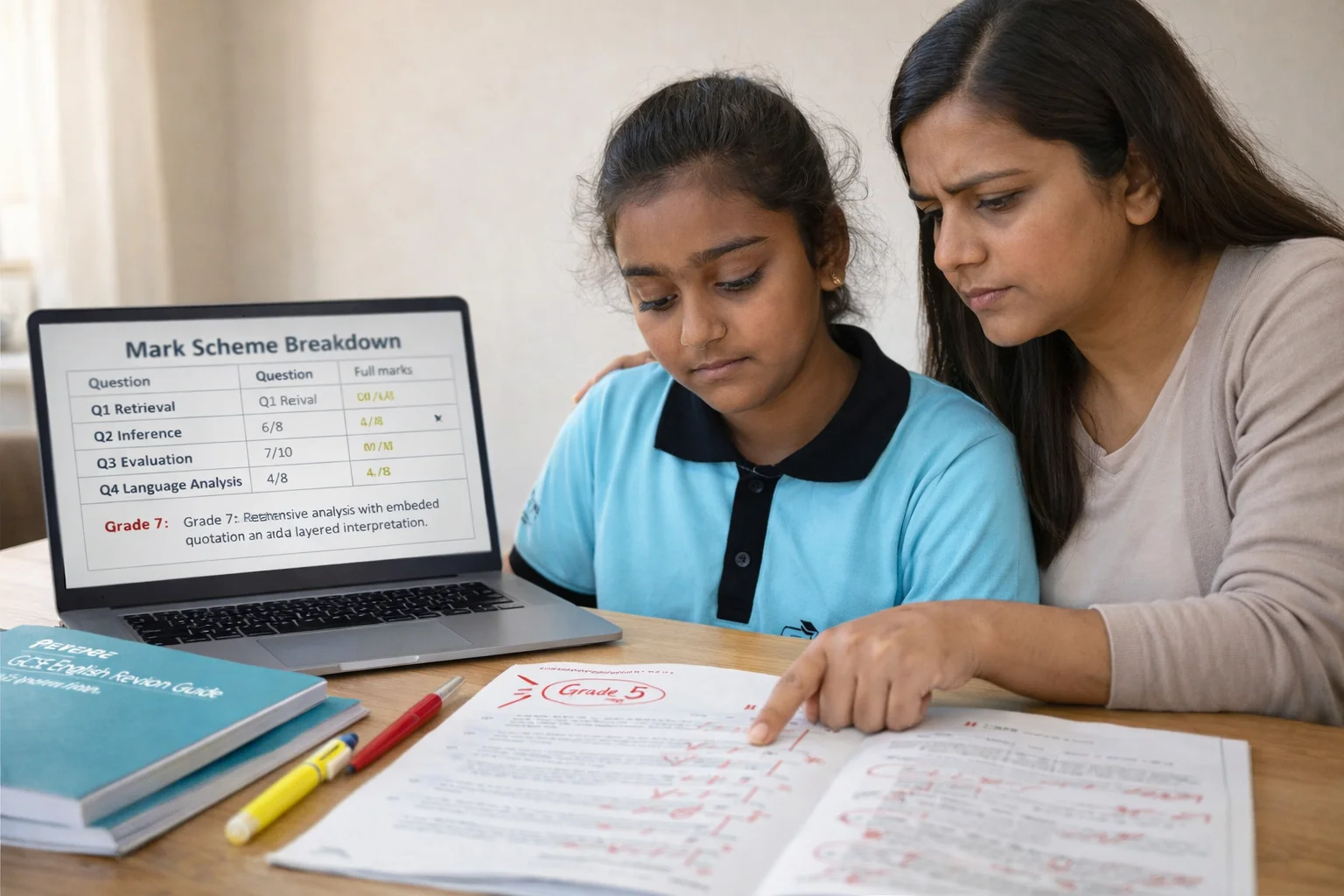
Of everything on the slip, two subjects carry more weight than the rest. GCSE Maths and GCSE English are treated as baseline qualifications for almost everything that follows. A grade 4 or above in both is the minimum most sixth forms, colleges, universities and employers will expect, regardless of what a student goes on to study. Students who fall below this are typically expected to resit, usually in November of the same year.
According to the Department for Education's most recent figures, 73.2% of 19-year-olds achieved Grade 4 or above in both English and Maths in 2024/25, down from 76.1% in 2023/24 and 78.0% in 2022/23. Attainment has been gradually returning towards pre-pandemic levels, which means the margin for error on these two subjects is shrinking, not growing.
That downward trend is worth sitting with for a moment. It is not a story about students working less hard, it is a sign that the temporary grading leniency of the pandemic years has fully unwound, and outcomes are now settling back to a tougher, more typical baseline. For families, the practical takeaway is simple: do not assume last year's grade boundaries or pass rates will repeat exactly. Treat GCSE Maths and GCSE English as non-negotiable priorities well before results day, not subjects to firefight afterwards.
7. What Strong GCSE Science Grades Unlock
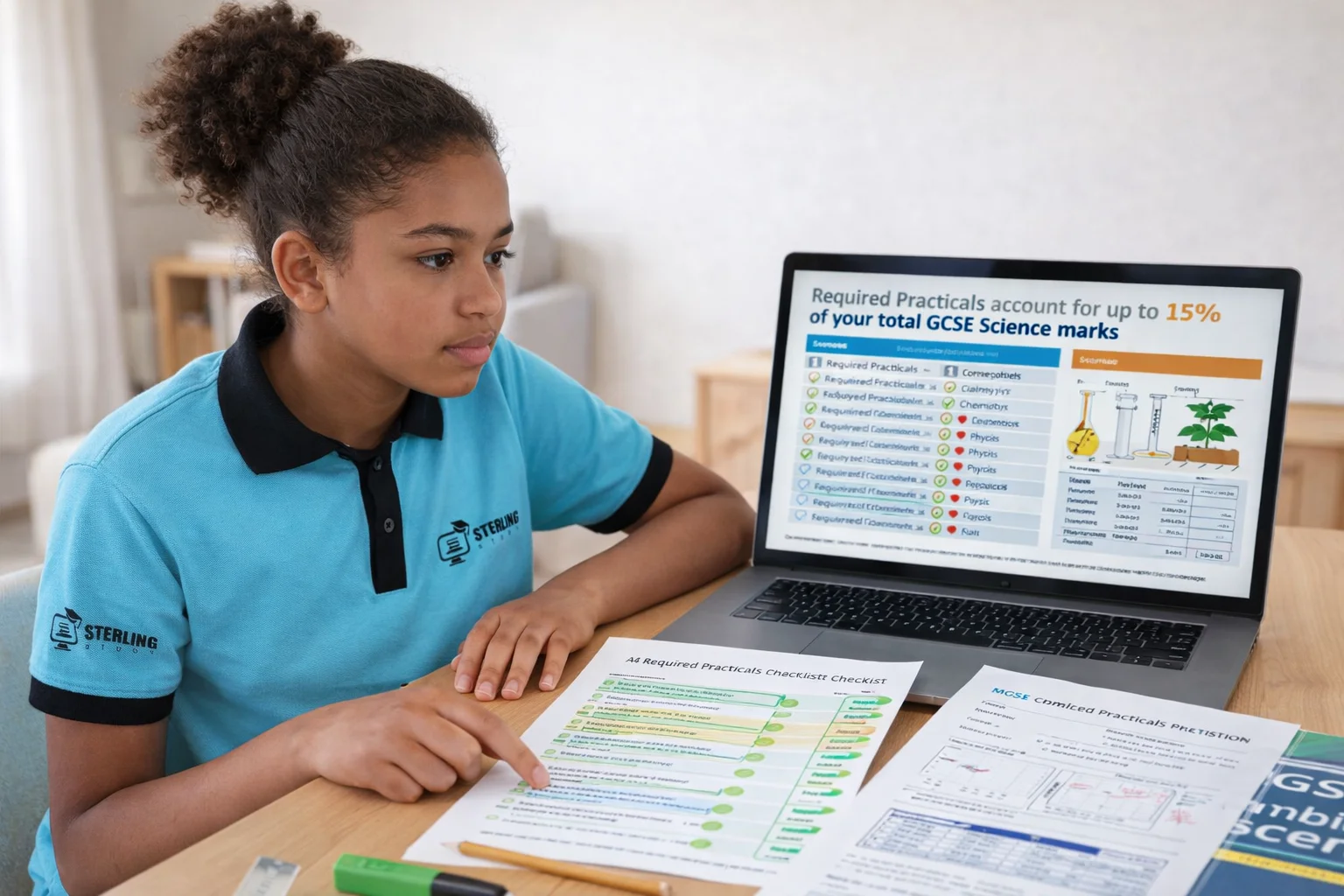
For anyone with ambitions in Medicine, Dentistry, Veterinary Science, Engineering or any STEM degree, GCSE Science is where that path either stays open or narrows considerably. Most sixth forms ask for at least a Grade 6 in the relevant Science subjects before allowing students onto A-level Biology, Chemistry or Physics, and the more academically selective schools often push that requirement to a Grade 7.
This is one of the quieter pressures of results day. A student who is otherwise doing well can still find their preferred A-level combination blocked by a Science grade that landed one mark below the boundary a sixth form needed. It rarely gets framed that dramatically on the day itself, but it is exactly what is happening behind the scenes when a place gets queried or a meeting with a head of year gets booked.
- ✓ Medicine, Dentistry and Veterinary Science courses almost always require strong GCSE Science alongside A-level Chemistry and Biology.
- ✓ Engineering degrees typically expect a strong Physics and Maths foundation carried up from GCSE level.
- ✓ Competitive sixth forms commonly set Grade 7+ as their entry bar for A-level sciences, even where the official minimum published is lower.
- ✓ A weak Science grade rarely closes every door outright, but it usually means a harder conversation about which A-level combination is realistic.
This is the area Sterling Study was built around. Our PhD-led teaching team, shaped by Dr Parth Patel's academic background in Neuroscience from UCL, designed the GCSE Science curriculum with a deliberate focus on exam technique and the specific marks that get dropped most often in Biology, Chemistry and Physics papers. Across our students, 90% achieve Grades 6-9 in Maths, English and Science, the kind of margin that keeps A-level options open rather than narrowing them.
[IMAGE: A student and tutor reviewing a GCSE Science mock paper together, pointing at a specific question - illustrates the exam-technique focus described in this section]
8. What If You Don't Get the Grades You Need?
If results day does not go the way it was hoped, the first useful thing is to pause before reacting. This is genuinely one of the most common experiences of the day, not a rare misfortune, and there are clear, well-trodden paths forward from almost every outcome.
The first thing to establish is whether a review of marking is worth requesting. If a grade looks unusually low compared with the rest of the results, or a boundary was narrowly missed, speak to the relevant subject teacher or head of year as soon as possible, ideally on results day itself. They can request that the exam board review how the paper was marked. GOV.UK's official guidance on requesting a grade review confirms a review can move a grade up, leave it unchanged, or in rare cases move it down, so this is a decision to make with a teacher's honest input rather than as an automatic next step. Boards publish their own review and appeal deadlines each summer, typically several weeks after results day, so checking the current deadline promptly matters more than the review itself in most cases.
If Maths or English fall below a Grade 4, resits are the standard route back. Both subjects can be retaken in November, with results released the following January, meaning a student can be back on track well before the next academic year is properly underway. Other GCSE subjects are generally retaken the following summer alongside the next cohort. Students on a 16 to 19 study programme who have not achieved Grade 4 or above in English or Maths are usually required to keep studying those subjects until they do.
One set of grades, taken on a handful of mornings in May and June, does not define what a student is capable of. Many students who resit perform considerably better the second time, simply because they already understand the format and know which topics need work. Talking it through with someone trusted before deciding on next steps tends to help. There is almost always more flexibility in the system than it can feel like in the moment.
Outside resits and reviews, a missed grade does not automatically close every door. Some sixth forms and colleges will still accept a student onto an A-level or vocational course with a bridging arrangement, particularly where the rest of the profile is strong. Apprenticeships, T Levels, BTECs and other Level 3 vocational routes remain open too, and for many students these turn out to be the better fit anyway.
Many families start looking into tutoring in the days after results day, often for the first time. Whoever is chosen, it is worth asking directly about safeguarding rather than assuming it is covered. Every tutor at Sterling Study is DBS-checked, and our safeguarding policy sits under the direct oversight of a named Safeguarding Officer, Company Director Ms Yesha Mukhtiar. It is a reasonable question to ask of any provider, and a reputable one should answer it without hesitation.
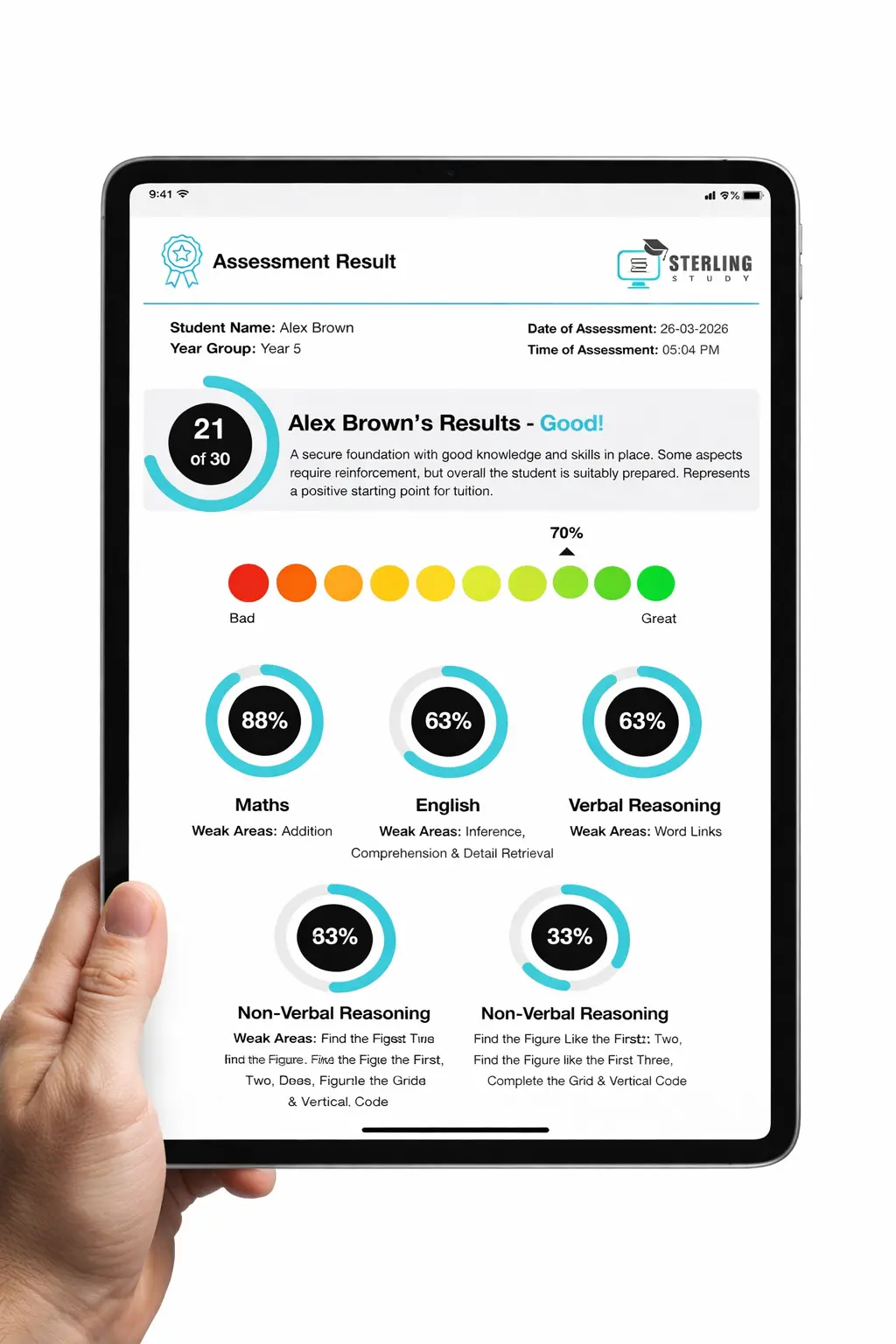
GCSE Maths
or English?
- ✓ Maths and English-specific breakdown
- ✓ Time-per-question analysis against real grade boundaries
- ✓ Clear view of how close a Grade 4 actually is
- ✓ Detailed PDF results sent immediately
- ✓ No strings attached
9. Post-GCSE Pathways: Sixth Form, College, Apprenticeships and Vocational Routes
GCSEs do not lead down a single track. Depending on the grades achieved and the goals in mind, several routes stay realistically open.
| Pathway | Typical entry expectation | Best suited to |
|---|---|---|
| A-Levels (school sixth form) | Grade 4-6+ depending on subject and school; Grade 6-7+ common for sciences | Students planning a university route in a specific subject area |
| College (A-levels or BTEC) | Varies by course; often more flexible than school sixth forms | Students wanting a wider subject mix or a more vocational academic style |
| T Levels | Broadly similar to A-level entry requirements | Students wanting a technical, industry-linked qualification with a work placement |
| Apprenticeships | Varies widely by employer and level; English and Maths at Grade 4 often required eventually | Students wanting to earn while training in a specific trade or profession |
| GCSE resits | N/A - a route back to the grade itself | Students needing Grade 4 in Maths or English to unlock their chosen next step |
Apprenticeship applications generally run through the employer or training provider directly rather than through a school application process, and requirements vary considerably by industry and level, so it is worth checking the specific listing rather than assuming a fixed national grade requirement. For students staying on the academic route, Sterling Study's A-Levels programme continues directly from GCSE, with dedicated teaching in Maths, Further Maths, Biology, Chemistry and Physics built by the same academic team behind the GCSE curriculum.
10. Do GCSEs Still Matter After Sixth Form?
It is tempting to think of GCSEs as a finish line, a set of exams sat once and then left behind. In practice, their influence runs further than most students expect.
A-level entry requirements are built directly on GCSE performance. A sixth form's published entry grades are not arbitrary; they are calibrated against what a student typically needs at GCSE to cope with the jump in difficulty and pace. This is particularly true for Maths-heavy subjects: a student moving into A-level Maths or Further Maths without a strong GCSE Maths foundation tends to find the first term considerably harder than expected, and the same pattern holds for the sciences.
GCSEs also follow students beyond sixth form itself. Russell Group universities, Oxbridge included, will often look at GCSE results alongside A-level grades and personal statements when assessing applications for competitive courses, particularly where A-level performance alone does not fully distinguish between strong candidates. GCSE Maths and English specifically remain minimum entry requirements for a wide range of degree courses and graduate careers well beyond school, and many employers still ask to see them on a CV years into a career.
Frequently Asked Questions
When does GCSE results day come out in 2026?+
What time do GCSE results come out?+
Can GCSE results be emailed to me?+
Are GCSE results out yet, and how many days until GCSE results day?+
What do GCSE results look like and what do they mean?+
How can I check my GCSE results online?+
What GCSE results day date applied in 2025, 2024 and previous years?+
What support is available for students feeling disappointed with their GCSE results?+
What are the requirements for A-level courses after GCSEs?+
How do I apply for an apprenticeship with my GCSE grades?+
Is online tutoring a safe option for my child after results day?+
What if my GCSE Maths or English grade is lower than I need?+
Read These Next
 GCSE Maths
 GCSE English
 GCSE Science